Fingerprint access should be treated as a convenience layer, not the whole plan
Biometric entry feels futuristic in a way that traditional lock hardware rarely does. Tap a finger, walk in, move on. But front doors do not exist in ideal conditions. Hands are wet, groceries are awkward, guests arrive, batteries run down, and someone eventually needs access who is not in the regular fingerprint list. That is why the strongest fingerprint lock setups still treat biometrics as one access method among several.
A keypad, physical key option, app access, or well-handled guest codes can all matter more than the fingerprint sensor itself once the house is in normal use. The best lock is the one that keeps the household moving when things are slightly messy, not the one that feels most futuristic in a clean demo.
Door fit and installation reality decide a lot before software does
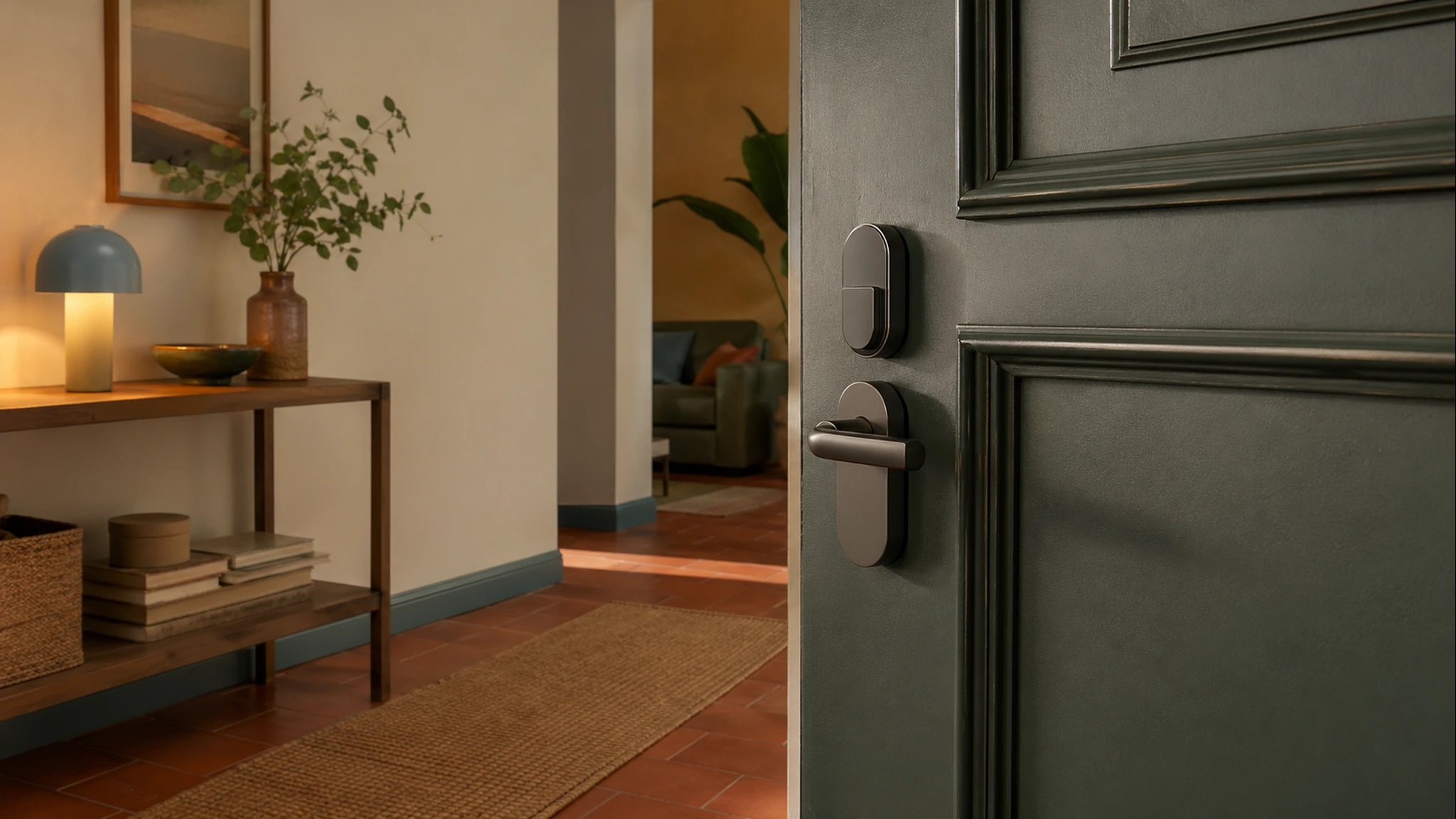
Smart lock shopping gets abstract quickly, but the physical door remains in charge. Backset, deadbolt compatibility, handle spacing, exterior exposure, and how much modification the door can tolerate all shape the real shortlist. Some doors are better candidates for a full replacement. Others are much better served by a retrofit-style option that leaves more of the existing hardware alone.
This matters even more for renters or households that want a lower-drama install. A lock that is easy to mount and easy to reverse can be worth more than a more feature-rich model that turns the entry into a weekend project. The smartest front-door purchase is the one your actual door can support gracefully.
Shared access is where smart locks either shine or disappoint
A fingerprint lock often becomes less about the person who bought it and more about everyone else who needs to use the door. Family members, older relatives, dog walkers, cleaners, short-term guests, or delivery handoffs each place different demands on the system. If adding, removing, or managing access is awkward, the lock starts feeling more complicated than the problem it was meant to solve.
That is why backup entry options and clear access management deserve serious weight. A front-door device should reduce friction for the household, not introduce a new layer of coordination problems every time someone needs temporary entry.
Reliability beats feature overload at the front door
Front-door hardware lives in a harsher environment than many other smart-home devices. Weather, battery timing, daily repetition, and security expectations all raise the bar. A simpler lock with predictable behavior can be better than a more ambitious one that promises everything but feels less stable in everyday use.
That is the right lens for this category. Entry hardware is infrastructure, not a novelty toy. If the fingerprint reader is fast enough, backup options are clear, and the lock fits the door well, that combination matters more than a crowded feature sheet. At the front door, confidence is part of the product.